- The Financial Brain
- Posts
- 🧠 20 companies, 1 big risk
🧠 20 companies, 1 big risk
3 questions to detect false protection.

Nessrine Slimani
April 18, 2026
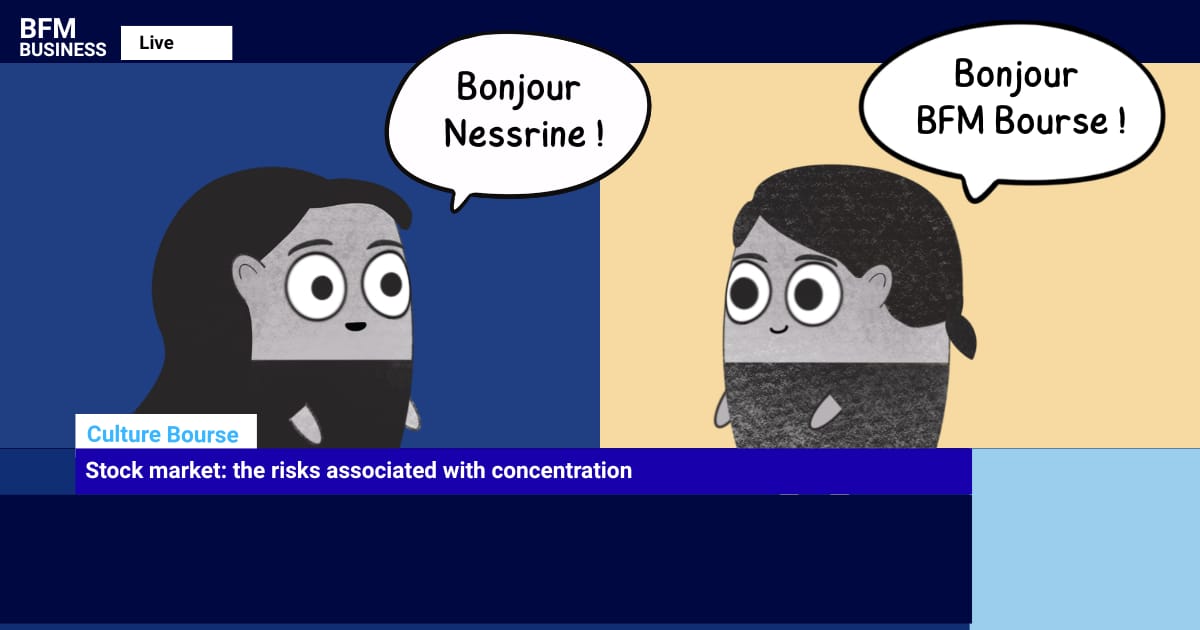
Is having 20 holdings in your portfolio enough to be well diversified? No.
We feel falsely protected when we hold 20 companies in our portfolio because we think: if one fails, the other 19 will compensate.
This is a first step to protect your savings, but unfortunately it is not enough.
Why is that?
Because what makes concentration so hard to see is that it comes from our convictions. We are optimistic about certain sectors like tech, about certain economies like South Korea.
And it is precisely because we believe so strongly that we invest too much there.
So are we really diversified if we hold just one conviction, in twenty different forms?
How do we spot this concentration?
What is the real warning signal?
How do we diversify without falling into the opposite trap (too many holdings we can no longer follow)?
This week I revisit the topic we discussed on Tuesday in the Culture Bourse feature with Julie Cohen-Heurton on BFM Business.
It all starts with a conviction
When we invest, we put our money where we have convictions, meaning where we have strong beliefs about the future of a sector, a geographical area, or a macro-economic trend. We are optimistic about this direction, and we cannot see how it could collapse. So we put a large part of our savings there.
The problem is that with this type of conviction, we often end up with duplicates without realising it.
If you do stock picking, you may hold 20 different companies of which 6 have the same activity or depend on the same growth driver.
If you invest through funds, several of your funds may duplicate the same exposures. For example, a tech fund and an AI fund will both overweight the same companies.
In both cases, you end up with a concentration risk: if unfavourable regulation arrives, if a supply chain problem occurs, all these companies are impacted at the same time. You thought you had 20 different positions, but in reality, they all react the same way to the same event.
How do we spot this concentration?
Simply by analysing your positions to identify if they share the same growth driver.
On sector: Is a large part of my positions concentrated in 2-3 sectors? If yes, this is a practical warning signal, even if the right threshold depends on your profile.
On geography: Is the majority of my positions concentrated in a single geographical area?
On macro trend: Do most of my positions all benefit from one single macro trend? (Ageing population, energy transition, etc.)
On correlation: Do my positions tend to rise and fall at the same time? If yes, they do not compensate each other, they amplify each other.
Avoid falling into the opposite trap
Over-diversification is when we accumulate so many positions that we dilute our portfolio to the point of creating four problems.
First problem: an illusion of security.
We feel reassured by holding 50 companies, but if 40 of them share the same geographical or sectoral exposures, you have only reduced individual bankruptcy risk, not the risk specific to the sector or geographical region.
Second problem: fees accumulate.
Each new position purchased generates transaction fees. The more positions you have, the more these fees eat into your performance.
Third problem: difficult to maintain a good overall view.
With 50 companies or 20 funds, it becomes difficult to properly follow what is happening in each one. Be careful: if you no longer separate from what is not working, you let your portfolio drift.
Fourth problem: mediocre performance.
To avoid this, check that each position has a clear role: Defensive role? Growth driver? In what proportion to be aligned with my risk profile and investment horizon?
What solution to fix this?
Ideally, before starting, we do preparatory work.
Questionnaires to estimate your risk profile.
Reflection on motivating goals in the medium and long term
Estimation of the allocation of your savings between different investment solutions.
Reflections on how we will de-risk and gradually withdraw our savings from financial markets.
We can fit all these points on one to two pages. This gives us a reference point. Without this initial plan, it is difficult to know if we are moving away from what we had planned.
We will very likely need to make adjustments to this initial strategy: sometimes we realise we had overestimated our risk tolerance, sometimes our situation changes.
But it is this plan that allows you to answer the questions we asked at the start of this newsletter: is my portfolio too concentrated on a specific criterion? Is this intentional? Does each position have a clear role? Have I over-diversified?
If you realise you are too concentrated, two options: sell the duplicate positions, or redirect your new contributions towards under-represented areas. The choice depends partly on the tax rules that apply to your investment account type and your country of residence.
I sincerely hope this edition will help you better understand how to protect yourself against this concentration risk.
And here is the link to the Culture Bourse feature if you would like to watch these points in video.
Take care,
Nessrine
P.S: Thank you to everyone who came to Eyrolles Bookshop last Thursday for the launch of my book! I loved the Q&A session and it inspires me with other topics to cover soon! I wish you great success in your investments!

Where are you with today's topic? |
Important reminder: This content is for educational purposes only, not investment advice. Make sure to do your own research before getting started. And remember that all investments, ETFs included, carry risks of capital loss.
Reply